All posts by ah

Professor Ursula Emery McClure Named on List of 13 Innovative Female Architects Around the World

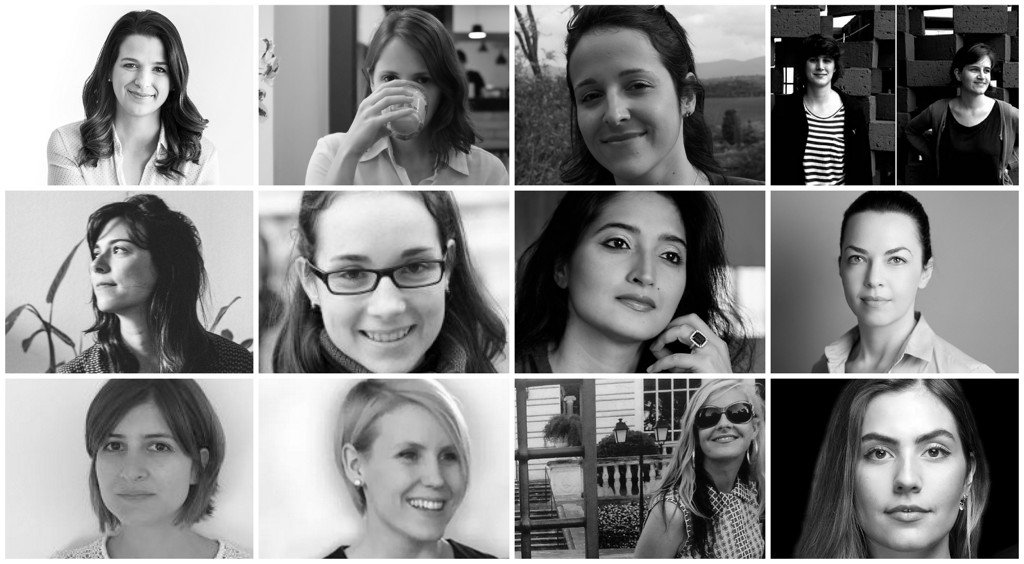
Ursula Emery McClureUrsula Emery McClure, FAAR, AIA, LEED AP BD+C, A. Hays Town Professor in the LSU School of Architecture, was named on ArchDaily’s list of 13 leading female architects, the only architect in the United States to make the list. The article “Celebrating A Generation of Women Leaders in Architectural Practices Around the World,” published April 3, 2018, recognizes innovative female architects across the globe.

Professor Emery McClure is listed among architects from Brazil, India, Denmark, Mexico, France, Portugal, Uruguay, Argentina, and Spain. “In the age of the ME TOO openness, it is an honor to be recognized for working against the quid pro quo,” she said.

Female architects - ArchDaily

Professor Emery McClure is the founding partner of emerymcclure architecture firm. “Our research practice speculates on the role of design in the confluence of multiple, seemingly contrary systems and aspires to develop tectonics that configure their futures,” she said. “Our sites are never grounded, our conditions are never predictable, and our parameters are always in flux; they exist at the edges and transformational zones. Our practice searches to define potentialities found within complex systems and to contribute to the rich and unique global traditions where sociocultural and physical contexts are entrenched in architecture.”

emerymcclure architecture's BSL-2 house won an ARDA in the Custom Home Category.

emerymcclure architecture’s BSL-2 house won an ARDA in the Custom Home Category.

Professor Emery McClure teaches in the LSU Master of Architecture program and seminar courses that focus on Louisiana culture and architecture. She has also served as the southwest director for the Association of Collegiate Schools of Architecture. emerymcclure architecture won the Sukkah City STL competition and the 2013 Unbuilt Visions Competition. Professor Emery McClure was also awarded the 2013 ARCC Research Paper of the Year Award for her research of historical constructions along the Louisiana Coast.

Alumni Spotlight: Elise Grenier, Art Conservator

Woman paints fresco in Duomo, Italy

Elise Grenier works on the Duomo in Florence, Italy

“There is a lot of mystery around art restoration,” Elise Grenier (MFA ’87) laughs when asked what she does, exactly. “My goal is to demystify the process of restoration.”

Elise, founder of Grenier Conservation, has spent three decades as a preservationist of historic art – both in Florence, Italy and her home state of Louisiana. In vastly different locales, she has restored public art with tremendous historical significance, paintings that provide glimpses into the past.

She is careful when she uses the word “restoration,” which might imply the conservator is retouching the artwork. The goal of restoration is not to retouch, she explains. To properly conserve art, she works to preserve the original artist’s work without changing its nature. “If I can get away without doing any retouching, I have won,” she says.

Elise’s philosophy of preservation has come from years of experience working in Florence, Italy. Over the years she has come to realize that often the proper course of conservation of a work of art is to monitor the deterioration of the piece, but not actually perform action. Higher quality artwork often doesn’t require intervention, she asserts; it’s the natural “wear and tear” of the aging process that lends history to the piece.

Woman inserts foam into cracks in mural

The question she always asks herself when approaching a new preservation project is: “Does it really need restoration?”

Sometimes the answer is no, despite the protests of those who would prefer that the artwork be cleaned and repainted to appear brighter, flashier, more obviously changed. “I ask myself, ‘Is this art being restored for the right reasons?’”

The preservation process typically begins with physical assessment of the piece and its restoration needs, often including chemical analysis of the materials. Elise thoroughly researches the history, from the original artist to the (often many) restorers that added to the piece over the years. She then gives her “diagnosis” of what the art needs, providing a full conditions report and making recommendations for the best methods of conservation for the art in question.

If she does deem physical restorations necessary, Elise follows a careful ethical code to ensure that she maintains the integrity of the work. Her criteria for restoration must pass these basic principles:

  • The materials she uses must be reversible for future conservators, as the practice of preservation evolves in the years to come
  • Her work on the piece has to be recognizable as a conservator’s intervention to show that it is separate from the original artist
  • She never retouches anything that is not actually missing from the piece

It is the responsibility of a conservator to preserve art in a reversible way, she explains, so that as preservation methodologies advance, they can always be improved upon. Elise is a member of ArtWatch International, an organization that monitors the preservation processes of public art; its goal is to monitor and campaign for better practices in the conservation of art works.

Elise works on famous Italian Renaissance muralsArt conservation is a relatively new science, Elise says. She believes that the 1966 flood of Florence was a catalyst for the modern practice of preservation, which rose out of necessity when the city flooded, and much of the historic art along with it. Elise compares the flood to the effects of Hurricane Katrina in New Orleans – so much water sat in the city after the deluge that many buildings suffered from damage, and art historians scrambled to save priceless art and artifacts from ruin.

“The flood triggered the practice in the sense that there was a critical need for practical solutions to preserve the important art in Florence,” Elise describes; modern art preservation and restoration came about as a result.

Elise came to Florence in the 1980s as a young art restoration student, and worked for two of the most prestigious conservation firms in the city before forming her own company, Grenier Conservation. Elise had the opportunity to work on renowned art in the UNESCO World Heritage site, including in Renaissance churches and villas, historic palaces, and none other than the Santa Maria del Fiore, Cupola of Brunelleschi of Florence, commonly known as the Duomo. She was part of the team that conducted the restoration project of the frescos of the Last Judgement by Giorgio Vasari and Federico Zuccari (1572-1579).

It was unbelievable to work closely with the art by the Italian Renaissance masters, she says. “Works that aren’t meant to be seen up close, such as the cupola of the Duomo. Up there on the scaffolding you can see incredible detail that you can’t see from the ground: every little eyelash, every beard hair, perfectly indelible.”

Elise didn’t know what art preservation was, initially. She was always interested in art, her love of drawing and painting fostered by her father (Charles Grenier, professor emeritus in LSU School of Social Work), and she went to LSU for her B.A. in fine arts and art history with a minor in Italian. She comes from an “LSU family,” she explains, having grown up in Baton Rouge and often visited the campus where her father worked.

On a trip to Europe for her father’s work – the family accompanied him to international conferences as an opportunity for travel – Elise witnessed a man working on a restoration project in the San Marco Basilica in Venice, and she was utterly fascinated. (She later realized that it was likely conservator Dino Dini, whose work she would later come to know well.)

Elise was hooked. After graduating with her M.F.A. in art history from LSU she moved to Florence for advanced study of fine art restoration and conservation, earning degrees from the L’Universita Internazionale dell’Arte e Restauro and the Associazione Intercommunale Fiorentina. There she learned the methodologies of preservation. Over the years she worked on dozens of projects including the Church of Santa Croce, the Bargello Museum, and the Palazzo Pitti.

“I’m very proud that I’m Florence-trained,” she says, citing the Italian city as the source of conservation best practices. Now Elise has brought her years of experience restoring the artwork of the Italian masters – alongside the Italian master preservationists – in Italy back to Louisiana. Her preservation process for Renaissance frescoes is exactly the same as when approaching Art Deco murals in the United States.

The Murals of LSU Allen Hall Restoration

In 2001 Elise worked on the comprehensive conservation campaign of the murals of Allen Hall at LSU. Allen Hall, now home to the Department of English and University College, is one of the buildings that form the historic central core of LSU campus. Fresco murals were done in the 1930s on the interior walls by students of Professor Conrad Albrizio, LSU art professor and fresco artist. (Albrizio was a creator of the Fresco Guild, the American contingency of the international art movement that included influential muralist Diego Rivera.)

The historic murals in Allen Hall depict scenes of Louisiana—and LSU—life in the 1930s. Portions of the paintings had faded from their original vivid colors, and Elise performed a non-invasive cleaning methodology to remove 70 years of dust accumulation. During the restoration work the student artists’ theses were consulted, and another fresco was discovered to have been part of the original project – over the years it had been completely covered by layers of latex paint. Testing the portico wall established its continued existence, and after the paint layers were removed, the large painting was recovered completely intact.

Elise remembers walking through Allen Hall years ago herself as an undergraduate student, never knowing that there was art silently waiting to be uncovered. “I was proud to be a part of the project on LSU’s campus, preserving that legacy and honoring an important moment in American art history.”

Bringing her expertise from Italy back home to Louisiana feels like she has come full circle. In Louisiana Elise has also restored murals at the Lakefront Airport in New Orleans, the Louisiana State Exhibit Museum in Shreveport, and paintings in several South Louisiana churches and plantations, including the historic Whitney Plantation.

Most recently Elise has worked on the restoration of the artwork in the Louisiana State Capitol in Baton Rouge, which were painted in the Art Deco art style during the Huey Long administration. The murals in the Capitol Annex, painted by Albrizio, were commissioned as part of the New Deal public arts programs during the Great Depression when the new State Capitol building was constructed in 1931.

Elise likens this period in the 1930s when federally-sponsored public artworks were created for public consumption to “the art Renaissance for the United States – it was a time when public art was meant to reach audiences, convey messages, and it was a very important moment for U.S. art history.”

As a former student of art history, Elise appreciates the historical significance of the work she works to preserve, even if the physical process is often taxing. Many of the paintings she restores, such as the Louisiana Capitol ceiling art, are 35 feet up in the air; thus, Elise spends a lot of time working on elevated platforms, looking up. But it’s absolutely worth it.

She describes every artwork she has preserved in vivid detail. Her work at the Whitney Plantation, an important site of historic art in the U.S., for example: “I studied the site and saw that the gold on the wainscoting was abraded,” she says. “But that tells a story: of the home’s usage, of the passage of time.”

And Elise, as the conservator, becomes a part of that story. It is extremely satisfying to be part of an artwork’s health and history, she says. “The art will be around long after I’m gone – the work will live on, and I’m glad to be a part of it.”

Art History Professor William Ma Receives Site & Space in Southeast Asia Research Award

Professor William Ma in Southeast AsiaArt history assistant professor William Ma won the Site and Space in Southeast Asia research award, a two-year funded research opportunity exploring the art, architecture, and landscape of Southeast Asia.

Site and Space in Southeast Asia explores the intersections of urban space, art and culture in three cities—Yangon, Penang, and Huế—through collaborative, site-based research. With major funding from the Getty Foundation and partners from within and beyond the region, Site and Space in Southeast Asia seeks to support innovative research in the art and architectural histories of the region, foster professional networks among early career scholars, and expand engagement with an ever more global field.

Engaging with cities as sites that generate cultural narratives, researchers will explore spaces of memory, interaction, and production across national and regional boundaries. With a chronological span from the colonial period through independence and into the contemporary, a period of dynamic, often divergent political and social development, Site and Space in Southeast Asia seeks to enrich the study of art and architectural histories of Southeast Asia through engagement with site and space.

“This is a great opportunity to extend my field of research into Vietnam because of its geographic and cultural proximity to the southern border of China and its deep French colonial history, a combination that serves as a perfect laboratory for topics I have been exploring in my work: interactions of different ethnicities and cultures, artistic hybridity created under the European colonial conditions, formulation of regional identities through artisan practices, and ideological claims of space and architecture,” Professor Ma said.

Over the course of the two-year research period commencing in June 2018, three small teams of researchers will be funded to conduct field and archival research exploring the physical and cultural histories of three project cities, with a particular interest in their artistic and built environments. Annual whole-of cohort workshops will allow comparative discussion of findings and mapping of future research directions. During the first year, collaborative research will allow a “coming to terms” with the city as site and its intersecting art historical themes. During the second year, researchers will pursue individual projects emerging from these themes. The project will culminate in one or more collective outputs to be determined through discussions with participants and institutional partners.

Ma’s research team includes two architects, two art historians, and a curator; the scholars come from institutions in France, Vietnam, and the United States. “I picked the team that is working on the city of Huế for its rich imperial and colonial histories,” Ma said. “For this project, I would like to situate some of the important historical sites within the fabric of urban life, especially when it comes to questions about preservation and conservation.”

With major funding from the Getty Foundation’s Connecting Art Histories Initiative, Site and Space in Southeast Asia is organized in partnership by researchers at the University of Sydney, Nanyang Technological University, National Gallery Singapore, the University of Malaya, the University of Toulouse, and Dumbarton Oaks Research Library and Collection. While field directors will lead research teams in each city, the overall program is directed by Stephen Whiteman, Lecturer in Asian Art at the University of Sydney, with professors Adrian Vickers, Director of Asian Studies, and Mark Ledbury, Director of the Power Institute.

Ma said that the opportunity to participate in this research initiative came as a surprise. “I am delighted and excited to be working collaboratively with an international team of scholars from different fields on this project.”

Hand Lettering Experts Give Workshops at School of Art

Graphic design students had the opportunity to attend a number of hand lettering workshops this 2017-2018 academic year, to hone their skills.

Graphic artist/designer Peter Bain visited the LSU School of Art to give a lettering workshop for art students, a great opportunity to practice lettering skills. “It was a great pleasure to come to Louisiana State University and lead a hand-lettering workshop for students in the School of Art,” he said.

The students practiced skills including designing and creating hand lettering, and had the opportunity to practice a wide variety of styles.

“The LSU students were motivated, and showed a willingness to approach historical forms from a contemporary standpoint,” said Bain of the workshop experience. “[It was great] having an enthusiastic group. I was very pleased with the results and hope that they continue to engage with letterforms, regardless of medium, in the future.”

Additionally, local Baton Rouge artist Jennifer Hester came to LSU’s School of Art to share her knowledge of hand lettering with the members of GDSA, the Graphic Design Student Association. Jennifer is an established sign artist for Trader Joe’s, and she shares her daily hand lettered quotes and signs on her Instagram (@hellochalk.design).

“Through her class, she taught what makes hand lettering different from calligraphy and typography,” said BFA candidate Angel Chang. “She also showed the members how to properly hold a pen to make different strokes and how she goes about laying out a design before starting the actual inking of her creation. GDSA was very grateful Jennifer was able to share her experience as a hand letterer!”

“These were excellent opportunities for art students to learn from experts in these areas,” said Lynne Baggett, graphic design professor.

“These workshops were so appreciated – it’s been extra special,” said Meghan Saas.

Phillip Fernberg a 2018 Olmsted Scholar Nominee

MLA candidate Phillip Fernberg, 2018 Olmsted Scholar Nominee, chose to pursue landscape architecture because the practice allows him “to literally make a positive (and hopefully beautiful) impact on the world!”

Phillip was nominated by the landscape architecture faculty to be an Olmsted Scholar because of his impressive resume and character, according to Robert Reich School of Landscape Architecture Director Mark Boyer. The Landscape Architecture Foundation’s Olmsted Scholars Program recognizes and supports students with exceptional leadership potential who are using ideas, influence, communication, service, and leadership to advance sustainable design and foster human and societal benefits.

Phillip describes himself as an aspiring designer, philomath, urbanist, and travel junkie. Though he has interests in many areas, his overall focus has always been to make a lasting impact through his work. “As of late I have become fascinated with urban design, ecological restoration, and plants in particular,” he said.

He grew up in Murrieta, California. He has a BA in Latin American Studies with minors in Scandinavian Studies and Urban Planning from Brigham Young University. He worked in the entertainment and hospitality industries before coming to LSU to study landscape architecture.

“I chose LSU because of the people!” He said. “It’s not often that you find a program where everyone you meet is approachable and genuinely cares about your success. The Robert Reich School of Landscape Architecture embodies such a community.”

At LSU Phillip has worked on projects including “Reacquaintance: LSU Quad Redesign,” a proposal to “reacquaint” the three-acre space on campus with student needs, after site inventory and analysis that included student interviews to inform the recommendations. He also worked on the “Catfish Square: The Re-Emergence of the Street Market in Baton Rouge” proposal that reimagines a vacant lot as a neighborhood street market. View Phillip’s online portfolio.

Phillip has diverse interests and experiences outside of his scholarly pursuits. He loves surfing – a nod to his southern California roots. He worked for a number of years as an entertainer, playing music for restaurants, character performing at Disney World, and hosting events aboard passenger ships for Princess Cruises, to name a few. “That’s my party trick I guess?” He laughed.

In the future he hopes to make a career as a “design generalist” – he doesn’t intend to limit himself to just one field. “Whether it’s residential design at a private firm, regional planning for the National Park Service, or managing international development projects abroad, I want to work in every sector on every possible type of project at every possible scale.”

Interior Design Students Create Garden to Promote Wellness

LSU senior interior design students participated in a community outreach project to design a garden at a home in Louisiana for young women who have been victims of human trafficking. The organization that operates the property, Metanoia, works to support girls in the United States by providing a safe home for them to live. The location added the kitchen garden for both practical and therapeutic purposes.

“The project was such a great community outreach opportunity and a meaningful experience for students,” said professional in residence Tracy Burns, a practicing interior designer at CDI Solutions, LLC, who organized the project.

The Metanoia home is a refuge for adolescent victims of human trafficking, housing girls “until they are ready to function in society,” according to the organization. The girls are supervised and nurtured by nuns who have volunteered their service in a non-denominational capacity to assist recovery. A volunteer staff of professionals, including physicians, nurses, social workers, educators and others, support the girls who live there. Goals include: physical health, mental health, spiritual health, life skills, education, and reintegration into society.

The garden’s objectives include promoting physical and mental wellness, as well as assisting the home’s residents to develop the life skills of cooking and meal planning. The garden provides an avenue to learn about gardening and healthy meal preparation, and offers a tranquil healing space outdoors on the property.

The LSU Interior Design Student Organization (IDSO) collected funds to purchase the herbs and flowers for the garden, and helped to construct and plant the garden. Their aim was to use design principals to create a garden space to promote recovery for the girls who live in the home.

“I feel so very fortunate to have been given the opportunity to leave a small, but long-lasting imprint on Metanoia,” said student Kristen Landry, (BID ’18), who is a design intern at Frost-Barber, Inc. “I hope the herb garden IDSO has planted will bring joy and delicious meals to them for many years to come!”

LSU Graphic Design Students and Faculty Win ADDY Awards 2018

Each year, the American Advertising Awards, also known as the ADDYs, the advertising industry’s largest competition, recognizes some of the best creative work in the country. The Baton Rouge American Advertising Federation annually recognizes “the creative spirit of excellence in the art of advertising” locally. In 2018 LSU’s graphic design students and faculty members won a number of awards. The 2018 Baton Rouge American Advertising Federation’s awards gala was March 3, 2018.

This year’s winners included:

The Graphic Design Student Office (GDSO) won a gold award for the LSU College of Art + Design Quad Magazine Fall 2017 issue, for magazine publication design.

Quad Magazine, 2017 Fall

The Quad Magazine Spring 2017 issue won a silver award for cover publication design; illustrations designed by Tory Cunningham (BFA ’17):

lsu quad magazine

Quad Magazine Spring 2017 Cover Design

GDSO also won a silver award for the Doctor of Design in Cultural Preservation direct marketing campaign.

The LSU School of Art won a silver award for the MA/MFA brochure in the printed brochure category.

LSU School of Art MA and MFA Programs

LSU School of Art professor Lynne Baggett won a silver professional award in infographics for the Letterform Anatomy poster for her exhibition Letterform Characters: From Stone Carver to Type Designer, a collaboration of LSU Libraries Special Collections. The exhibition was on display in Hill Memorial Library through February 2018, presenting a challenging assessment of the relationship between influential crosscurrents of craft, technology, and design over the course of nearly five centuries.

The 2018 ADDYs awarded to LSU graphic designers:

STUDENT AWARDS

2018 STUDENT BEST OF SHOW AND GOLD ADDY WINNER
KITSCH*
Category: Integrated Brand Identity Campaign
Entrant/Credits: Hayden Nagin, LSU student

GOLD

Category: Publication Design – Magazine
Quad: LSU COAD Magazine Fall 2017 // 
Entrant: GDSO | LSU School of Art
Credits: Lynne Baggett-Faculty Advisor; Luisa Restrepo-Creative Director; Kitty Pheney-Project Director; Angela Harwood-Editor/Writer; Tory Cunningham-Illustrator/Graphic Designer; Justin Bryant-Cover Illustration

SILVER AWARDS

Category: Direct Marketing
Doctor of Design Campaign 
Entrant: GDSO | LSU School of Art
Credits: Courtney Barr and Rod Parker-Faculty Advisor; Luisa Restrepo-Creative Director; Kitty Pheney-Project Director; Angela Harwood-Editor/Writer; Tory Cunningham-Graphic Designer; Justin Bryant-Cover Illustration

Category: Printed Annual Report or Brochure
LSU School of Art MA/MFA Brochure
Entrant: GDSO | LSU School of Art
Credits: Courtney Barr and Rod Parker-Faculty Advisor; Luisa Restrepo-Creative Director; Kitty Pheney-Project Director; Hayden Nagin-Graphic Designer

Category: Publication Design – Cover
Quad: LSU COAD Magazine Spring 2017
Entrant: GDSO | LSU School of Art
Credits:  Tory Cunningham-Illustrator; Courtney Barr and Rod Parker-Faculty Advisor; Luisa Restrepo-Creative Director; Kitty Pheney-Project Director; Angela Harwood-Editor/Writer

Category: Integrated Brand Identity Campaign
DOREMI
Entrant/Credits: Grace Choi Lee
School: LSU

PROFESSIONAL CATEGORY

SILVER

Category: Infographics
Letterform Anatomy Poster
Entrant: Bzquare Editions
Advertiser: LSU Libraries Special Collections and LSU School of Art
Credits: Lynne Baggett – Graphic Design / Photography

Learn more about the LSU Graphic Design Student Office.

Baton Rouge “Complete Streets” Project Features Work By Landscape Architecture Students

Two landscape architecture students’ project work was featured in the “Complete Streets Toolkit,” an initiative by the Baton Rouge Sustainable Transportation Action Committee to propose improvements to the Baton Rouge community. The Baton Rouge Sustainable Transportation Action Committee (STAC) is a joint initiative of AARP Louisiana and the Center for Planning Excellence (CPEX), established in 2012 as a coalition of local volunteer partners engaged in making Baton Rouge streets safer and more accessible for all travelers.

The “Complete Streets” proposal features project work by Hagan Doyle (BLA ‘18) and Matt Poche (BLA ‘18) from the LA 5001 Urban Design course, providing a visualization of infrastructure improvement opportunities in Baton Rouge Mid City.

“I always enjoy the opportunity to work on a project with the potential to have a real impact,” said Hagan Doyle, a fifth year landscape architecture student and research assistant in the LSU Coastal Sustainability Studio. “The North Baton Rouge community is such a strong community but has been historically disenfranchised. When designing for this project I wanted to focus on the current needs of the community by developing a sustainable, accessible, and safe corridor for pedestrians, cyclists, and public transportation.”

Complete Streets is a growing movement in Louisiana and across the nation, according to the “Complete Streets Toolkit.” A “Complete Street” is designed to accommodate all users – pedestrians, bicyclists, motorists, and transit riders of all ages and physical abilities. Unfortunately, many of Baton Rouge’s streets are not considered “complete” because the communities were designed with a focus on the movement of cars, without considering the movement of people using other forms of transportation.

“The result has been transportation infrastructure that often makes active transportation – such a walking, biking, and transit – inconvenient, unpleasant, and unsafe,” according to the “Complete Streets Toolkit.” Complete Streets include features such as sidewalks, bike lanes, pedestrian crossings, ADA accessibility, wayfinding signage, and transit stopes designed to bring comfort and safety for users.

The initial study area focused on Baton Rouge Mid City, taking into account pedestrian access, high-use bus stops, safety considerations, and traffic volume. The landscape architecture students’ images provided a visual representation of the proposed improvements to the area along the North Foster Drive corridor.

“The project is an example of how our students’ work is being used for service to the Baton Rouge community,” said Kathleen Bogaski, a professional in residence at the LSU Robert Reich School of Landscape Architecture, who taught the Urban Design course.

“I was humbled to have my work featured as an example for what could be done in the future to help this community,” Hagan said.

The toolkit is intended as a resource for advocates and communities that may be interested in enhancing their neighborhoods. The overarching goal of the Complete Streets project is to bring positive changes to the Baton Rouge community design.

Lake Douglas Authors Book Buildings of New Orleans

“New Orleans isn’t like other cities,” Stella tells her sister Blanche DuBois in Tennessee Williams’s A Streetcar Named Desire. Cradled in the crescent of the Mississippi River and surrounded by water, the city has faced numerous challenges since its founding as a French colonial outpost in 1718. The architecture of New Orleans is fascinating, steeped in a rich history filled with diverse influences.

Lake Douglas, associate dean of research and development in the LSU College of Art + Design and professor of landscape architecture in the Robert Reich School of Landscape Architecture, coauthored Buildings of New Orleans, published by the University of Virginia Press in April 2018. The book, co-written by Karen Kingsley, Professor Emerita, Tulane University, is “a handy insider’s guidebook to the unique built and natural environments of one of America’s most interesting places.”

Buildings of New Orleans is a detailed guidebook to New Orleans architecture—an authoritative, comprehensive, post–Hurricane Katrina overview of buildings, neighborhoods, and landscapes—tells a compelling and fascinating story of the city through concise descriptions of nearly 300 significant structures, open spaces, and lesser-known places, enhanced by 175 photographs and 23 maps.

Conveniently organized into thirteen neighborhood tours, two road trips into nearby parishes, and three excursions up and down the Mississippi River along the historic Great River Road, and enlivened by sidebars highlighting everything from renowned authors, cuisine, and jazz to public markets, green spaces, and historic preservation, this insider’s guide to New Orleans “will appeal to all who are interested in the history of one of America’s most interesting cities,” according to the University of Virginia Press.

“This book takes into account not only the historical architecture of the city, but also the unique landscape architecture of New Orleans,” said Douglas, who is a fellow of the American Society of Landscape Architects and an expert in American cultural landscape history.

lake douglasDouglas is the author of a number of books, including Public Spaces, Private Gardens: A History of Designed Landscapes in New Orleans (LSU Press, 2011) and he has published extensively in academic journals, popular magazines, books and professional publications in America, Europe and Asia, most often with a focus on the intersection of landscape architecture and other disciplines. His expertise in landscape history has a particular focus on 19th-century agriculture, horticulture and gardening.

Kingsley is Editor-in-Chief of the Buildings of the United States series, and co-editor of the Society’s digital publication, SAH Archipedia. She has published widely on Southern architecture, including Buildings of Louisiana (Oxford University Press, 2003) and The Modernist Architecture of Samuel G. and William B. Wiener: Shreveport, Louisiana, 1920-1960, co-authored with Guy W. Carwile (LSU Press, 2016).

Douglas will give a book talk at Hill Memorial Library on Wednesday, April 4. Event information.